

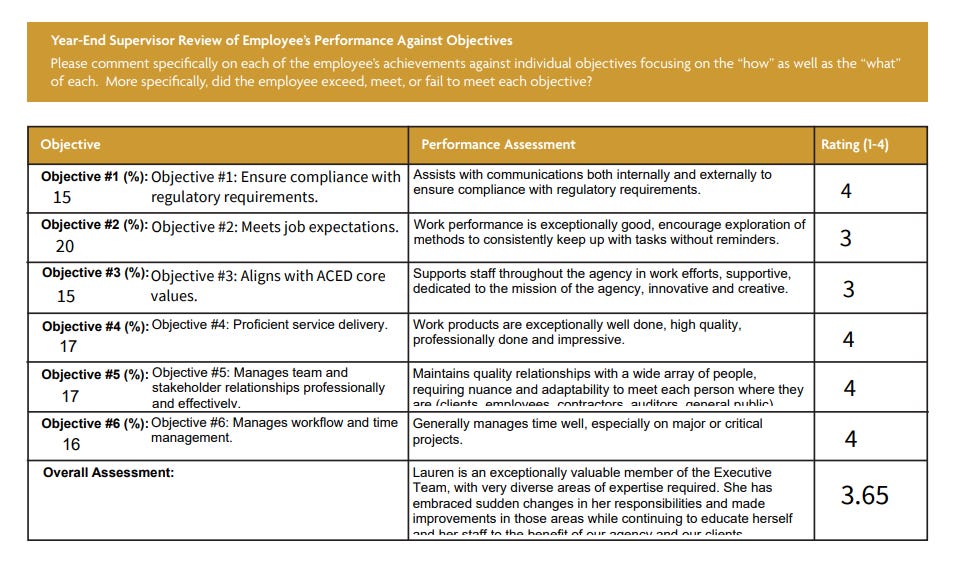
The last time I was reviewed, I was told I was exceeding expectations. And yet, in the same breath, I was quietly drowning in my own skin, unable to catch my breath.
You would be told that is high-functioning burnout, a phrase TikTok is fond of. Everyone wants to see how you can keep putting in the work and still come away feeling empty.
Social media will have its way with the story, but it leaves out the finer points. By rights I am not even a case of burnout; those who are familiar with me have made sure of that.
Take my previous position for instance. For a year and a half I was there, did what was required of me at meetings and in my duties, and had no feelings about it. I cared once upon a time until the company took a turn I could not support. From the outside you would not have noticed.
Things were in order at home as well. The housework was done, the kids had their homework and their activities. My husband is quick to point out I have a knack for it, or so he says, my post-layoff superpower.
In a sense I was the very picture of being burnt out. But let us don our lab coats and look at the definition rather than some study.
Some would have you believe the World Health Organization came up with burnout in 2019. It was in the ICD-10 well before then. The WHO simply put a finer point on it. An occupational phenomenon, they term it, “not classified as a medical condition” but something you may put down as a reason for a doctor’s visit. They have three criteria: exhaustion, a certain cynicism or distance from your job, and an inability to be as effective.
One should not read too much into the third. Mind Garden, publishers of the Maslach Burnout Inventory, would tell you professional efficacy is a matter of how you value your own contribution, not someone else tallying your results.
There is no such thing as a burnout score. The 2016 manual has done away with cutoff scores, not modified them but eliminated them as arbitrary and unreliable. You won’t find an official threshold if you are looking for one.
And here is what is overlooked. According to the WHO, burnout is for work only. Not the kids’ affairs or schoolwork or the house. Those are not jobs.
I see a figure bandied about and put to poor use. A July 2025 study by Dr. Michelle McQuaid and colleagues of 1,000 workers in Australia had 55% of them “quietly cracking”, her report says, and thus 6.2 times more prone to clinical burnout. Put little stock in it. The study is self-reported and there is no peer review. “Clinical burnout” is not a diagnosis the WHO would recognise. A survey cannot put a name to what is not there. Yet the pattern of the quiet struggler is undeniable and they are not shielded from it.
That is where it becomes a mess. Burnout is meant to pertain to your job, which is logical enough if you think work is the sole source of your depletion. More often it is the endless runaround of forms and prescriptions and schedules. Burnout does not cover that.
At 3pm no one is interested in your state of mind, provided you keep churning out the goods. You are rewarded for the performance.
We call this Flame in the Spiral, or the precursor to it. What is called for is some direction and an honest appraisal of whether you are making a choice in any of it. A curious question to pose in the middle of a good quarter. Don’t go expecting a five-step plan or to be counselled on conserving your energy by one who has no capacity for refusal.
The definition is open to interpretation and there is no threshold. Why make a wait of it? Put it to yourself: at what point has work been anything but a checklist? And for the sake of your steady output, what have you put on the line? Your evenings, your friends, another person’s patience?
The answers are there. As for the third part, let it come when it will; people make a mystery of it for no reason.
With Flame you might think you are up to more. In truth you have made room to stop. It is a choice not a reaction. Dan Siegel would term it response flexibility, one of his patients put it as pausing before you make a move.
From where they stand, high-functioning burnout and Flame are indistinguishable. They see a person who can be relied on to get things done. But look at the reserves. With one, the exertion has used up every last bit of energy. With the other there is still some in reserve to pause.
You will know from the way a cancellation sits with you. If you are panicking you are holding on by a thread. Relief tells you the energy is returning.
One could be forgiven for wanting to put the definition aside. There is nothing to be had from qualifying for burnout, it is not an ailment, there is no test or treatment. Should the exhaustion become physical or worse, put the definition to one side and make an appointment with a doctor. The issue is how to maintain a sense of effectiveness.
Don’t bother with the strategies that make you feel better for a minute, they don’t address the problem. When the disparity between expectation and what you have to give is protracted, something has to give and it is often the notion that what you do matters.
There are two ways to go about it. You can contain it. A matter of numbers not boundaries. How many late responses are you putting out? How many evenings? Going the extra mile unasked? For now the number is whatever comes in. Uninspiring but you have to do it.
Or you can provide some direction. Flame is energising but unless you put your mind to it, the energy will be expended on the thing making the most noise, which tends to be someone else’s priority. That is not self-care, it is simply not letting your schedule have its way with you.
Then there are weeks where nothing you do is going to fix it. These seasons arrive ready or not. Flame is what you have for those times. This is of more import than when things are easy. The gap doesn’t present itself in the hard season, it is already there. Flame affords you the space so you have something to show for it when it gets difficult.
It has its price. You will lose what you like as well as what pains you. Any friendship predicated on your giving will be the first to change course once you cease to provide. I have put pen to paper on this in Nobody Told Me I’d Lose the Friends Too, of the place I held in the group only so long as I was giving. Then the extras go, mostly obligations of my own making.
High-functioning burnout runs on a simple premise: you don’t need anyone; you take it all on. To require help is a failure in your eyes, so youwill make your work perfect come what may. It is not a display of strength; it leaves you inexplicably spent, even if the results are flawless.
It is a loss, in a manner of speaking, not progress.
What is most difficult in Flame is to concede it. The load is too much, and I am done with this kind of life. To say only the former is despair, the latter is denial. Most cannot hold both.
Time will see to the third question. You will decide whether to judge yourself or leave it to others.
“Exceeding expectations” and “quietly drowning in my own skin” in the same breath is such a striking pairing. It shows how easily performance hides what the body is going through. The feelings going flat that you describe is often what happens when a system has been in overdrive too long.