


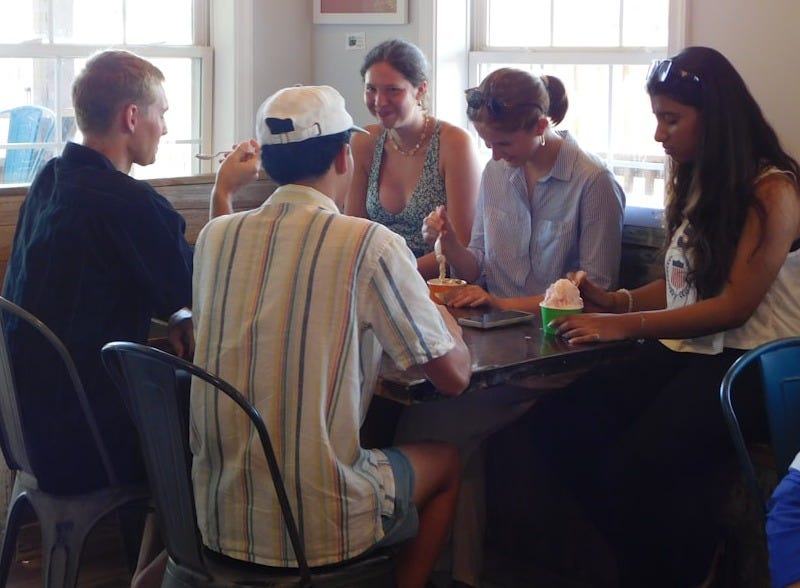
For a few years, my house was where everybody came.
Wednesday nights, mostly. I’d have the place clean by the time people started showing up. People would drift in and settle into the living room, and the noise would build, laughing over each other, telling the same stories again.
The kids ran feral in the best way. Mine were little then, two and seven, and they’d disappear into the backyard with everyone else’s kids or pile into the back bedroom and not come out until someone made them. You’d lose track of whose kid was whose. That was the whole point. That was the thing I thought I had.
The thing is, I wasn’t hosting out of obligation. I loved it. After the kind of years I’d had, this was a place that felt like I had somewhere to belong, and I built my whole week around it. I was so proud of my open door.
Then my marriage started coming apart, and I did a small, reasonable thing. I told them I needed to step back for a while. Just for a bit. I’ve got a lot going on, I need some time to deal with my own stuff, I’ll be back.
Completely normal thing to say.
The part where nothing happens
Nobody did anything.
There was no fight. Nobody said a cruel word. No one told me I wasn’t welcome. If you asked any of them, and I’m sure they’d tell you sincerely, they’d say they cared about me and wished me well and were so sorry about everything I was going through.
It’s just that when I stopped hosting, the texts got thinner. When I stopped making the food and clearing the counters and keeping the open door, the invitations didn’t always come. Nothing you could point at. Nothing you could bring to someone and say look, see, this is what they did. Just a room that slowly got quieter, and a phone that buzzed a little less each week, and a growing understanding that the thing was happening without a single moment you could name as the thing happening.
And because the divorce kept escalating, because I kept getting further from the woman who used to have it all together on a Wednesday night, they pulled back further. I wasn’t the put-together working wife and mom with the beautiful home and the open door anymore. I was a woman in the middle of losing everything, with nothing left over to give. And it turned out that the giving was the critical piece in a way I had not understood.
What I actually found out
I told myself a lot of stories in that stretch. They’re busy. Everyone’s busy. People don’t know what to say during a divorce; that’s just how it is. They’ll come back around once things settle.
They did not come back around.
And somewhere in the quiet, the real thing clarified. I hadn’t lost my community. I was finding out I’d never exactly had one. What I’d had was an arrangement. A place in the circle that lasted precisely as long as I kept the circle fed. Belonging that ran on what I provided, and quietly switched off when I stopped providing it.
That’s a different thing from being loved. It looks identical from the inside, right up until the moment you can’t perform it anymore, and then the difference is the only thing in the room.
I keep coming back to how clean it was. Nobody had to be a villain. The arrangement just ended when its terms stopped being met, the way a gym cancels your membership when the card stops going through. It wasn’t personal. That was the part that took me longest to sit with. It wasn’t personal because I had never quite been a person to them. I’d been a function. A house, a meal, a set of hands that showed up early and stayed late, and when the function stopped, there wasn’t much underneath it to miss.
The grief nobody warns you about
The grief came later than you’d think. Not when I stepped back, and not when the texts thinned. It came the week I finally understood no one was coming, and it was a strange, doubled kind of grief, because I wasn’t only mourning the people.
I was mourning the thing I thought I’d had with them. Which, it turned out, was smaller than I believed, and had been the whole time.
That’s a different kind of loneliness nobody warns you about. Losing people is one thing. Finding out the closeness was mostly weather, warm as long as conditions held, gone the second they turned, is another. You don’t just grieve them. You grieve your own read on it. You go back through four years of Wednesdays wondering if you were the only one who thought it was real.
Listen though, it was real, and it counts that it was real to you. Your warmth wasn’t the naive part. Opening your door wasn’t the mistake. You didn’t misread it because you’re foolish. You read it the way a person reads a room they feel safe in, and there’s nothing to be ashamed of in having felt safe. The terms were just never what you thought they were, and you had no way to know that until you stopped meeting them.
You already know where this is going
Because it isn’t just church groups, and it isn’t just divorces.
It’s the friends who got quiet when you got sober, because your drinking was the thing you did together and without it there wasn’t a together. It’s the ones who cooled off when you set the boundary, because the boundary interrupted the role you’d always played. It’s whoever drifted when you stopped over-functioning, stopped organizing everything, stopped being the reliable one who could always be counted on to hold it, stopped saying yes before they finished asking.
You changed one thing about how much you give, and you found out what the giving had been holding up.
I know how this feels while it’s happening, as if evidence is piling up against you. If they left when you changed, then changing must have been the problem, and the old you, the useful one, the one who kept the counters clear, must have been the acceptable one. So the move that’s actually your nervous system finally having enough capacity to stop performing gets filed as the thing that cost you everyone.
It isn’t. Read it the other way. You didn’t drive anyone off. You ran one honest test, without meaning to, and it told you the truth about the terms. The people who stayed after you stopped performing are the ones who were ever actually there. It’s a smaller number than the room you used to fill. It’s also the first real number you’ve ever had.
What stays
I don’t host Wednesdays anymore. For a long time Sunday mornings and Wednesday nights felt strange and empty, a whole schedule my life used to be built around, suddenly just regular hours in the week.
But the quiet eventually made room for something else. This isn’t a sad story. When you stop keeping a door open for people who only came for what was on the other side of it, you find out who knocks anyway. Nobody knocks for the food. There’s no food. They just want you.
That’s a smaller gathering. It’s also the only one that was ever real in the first place.
You didn’t lose the friends because you fell apart, or because you got difficult, or because the real you was too much. You lost an arrangement the moment you stopped funding it. And the loneliest, truest, most survivable thing I can tell you is that this is not the same as losing your people.
You’re just finding out, finally, which ones they were.
This is one thread from a longer story I tell in the Flame chapter of Spiraling Into Control — there’s a harder version of this scene in the book, in a church lighting booth, that I couldn’t fit here.
If you’re in the quiet part right now, the thinning texts, the invitations that stopped coming, you can tell me about it in the comments. You don’t have to have made sense of it yet.