


You got everything done. You held it together. You were the one people came to, the one who could handle it, the one who never seemed to need much.
And somewhere in there, you stopped being able to find yourself.
"The parts of you people admire most are often the very things that begin to fail you first."
— Chapter Ten
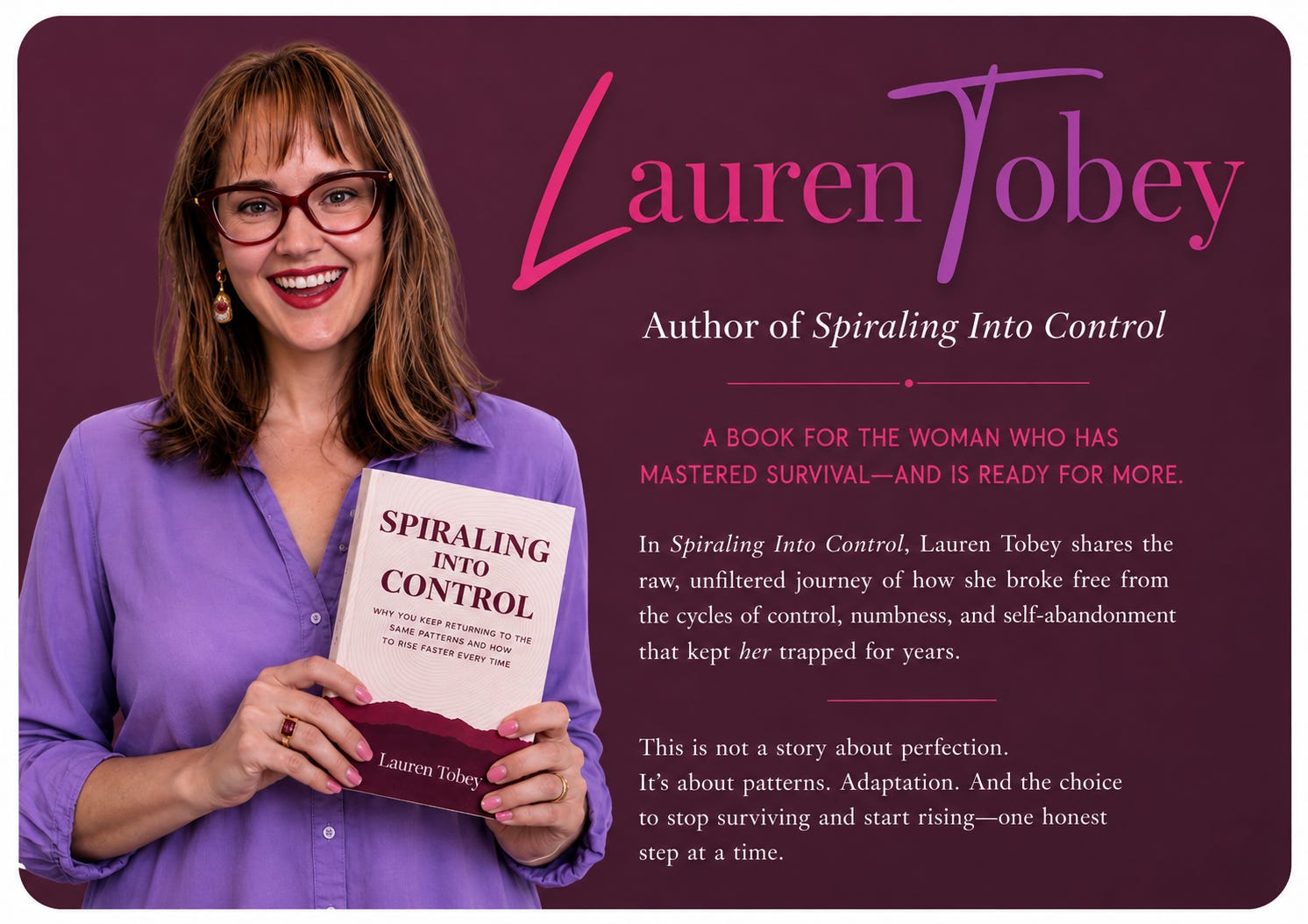

Lauren Tobey spent ten years inside a marriage that ran on her ability to absorb things. By every visible measure, she was fine — working, parenting, functioning, capable. Nobody asked, because there was nothing to see.
When it ended, she went looking for an explanation and found an industry that was very good at telling her what was wrong with her and useless at telling her what to do about it. Diagnosis after diagnosis. No direction. And underneath all of it, the quiet assumption that there was a previous version of her waiting to be restored.
There wasn’t. There never is.
“I moved through each task with the kind of efficiency that looks like competence and feels like disappearing.”
— Chapter Four
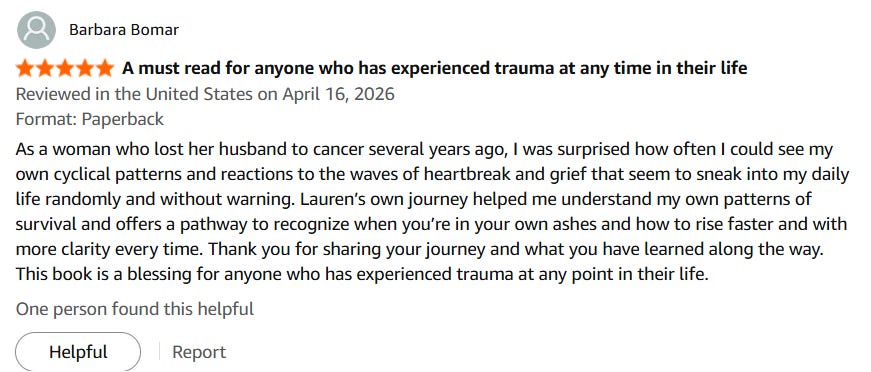
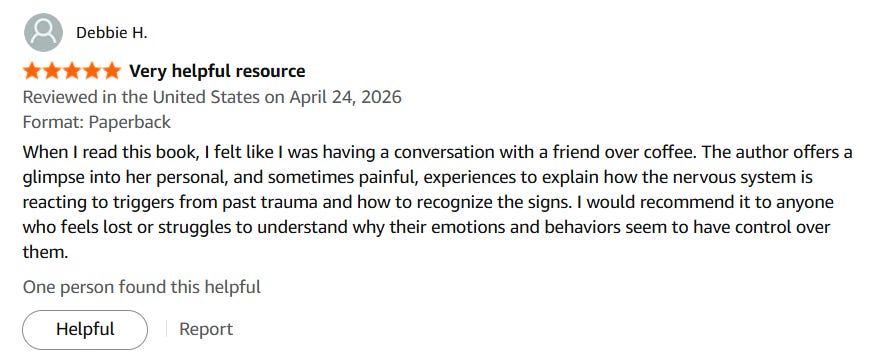
Spiraling Into Control is what she found instead: that survival responses can look remarkably like competence. That numbness passes for control, and shutdown passes for maturity, for years before anyone notices. And that the way out isn’t backward toward who you used to be — it’s forward, with better information about where you actually are.
The book gives you a map.
Four terrains your nervous system moves through — Ashes, Ember, Flame, and Rise — and three laws that govern the movement. You will return to each one. You return with more awareness each time. And rising gets faster.
That last one is the only promise the book makes. Not that you stop spiraling. That the climb gets shorter.

Not sure where you are? Take the assessment
You Are Here

Twelve questions. Ninety seconds. A straight answer about where you actually are right now.
Most of us know how to answer “how are you doing?”